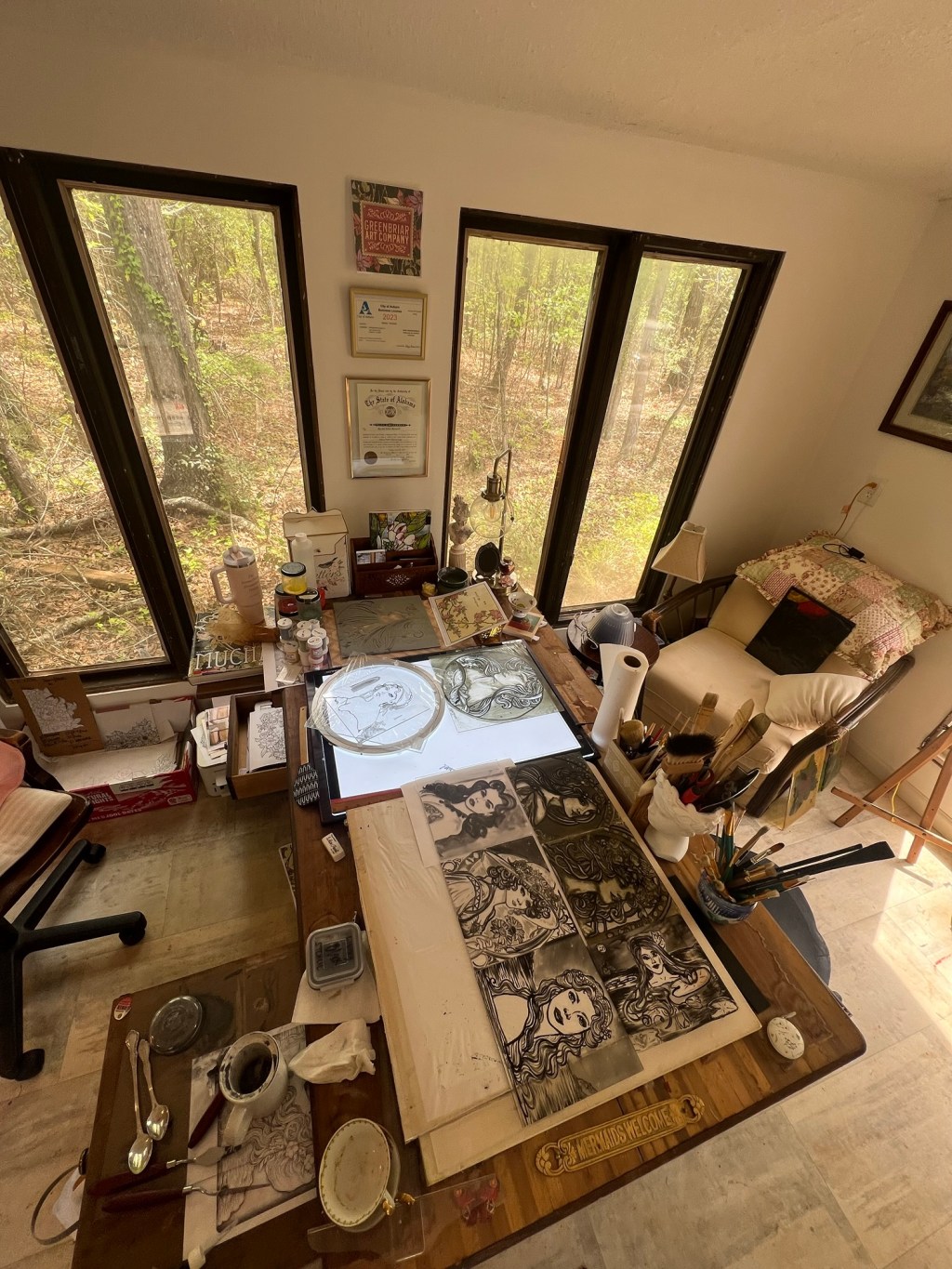
From the Greenbriar studio · May 2026
Before a body of work can take shape, there has to be room for it.
In May, Greenbriar began to claim that room. It appeared first in the calendar: protected studio days, time set aside for kiln work, painting, glass preparation, and the quiet labor of finishing what had already been started. Soon there were plans for the less visible parts of an artist’s practice too—collection notes, firing records, photography, inventory, packaging, pricing, and the long path toward a formal release.
These practical decisions carried more meaning than their lists and schedules suggested. Greenbriar was becoming a distinct chapter, with its own rhythm and identity. It was no longer something to fit into whatever hours remained after the rest of life had been tended. The work needed sustained attention, a place to live, and a record of how it came into being.
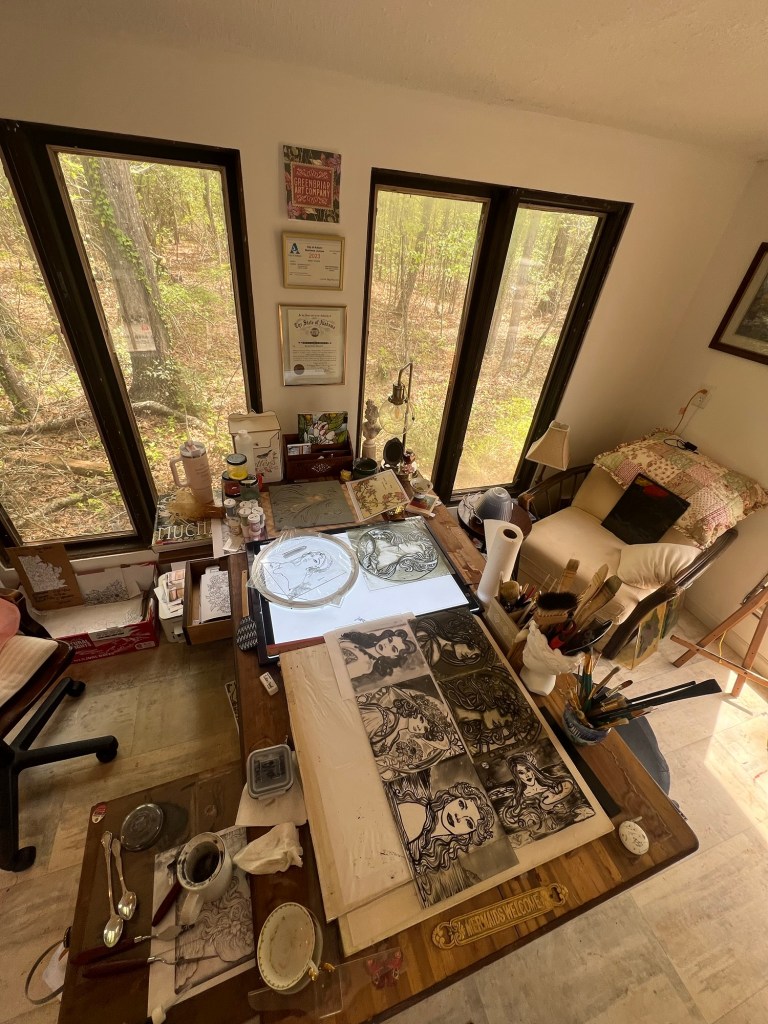
Even plans for the future began to make space for the studio. The idea of home included room for Greenbriar: somewhere glass could be cut, painted, fired, photographed, and allowed to gather into collections over time. The studio was becoming part of the architecture of the life around it.
There are months remembered through finished objects, and others remembered through decisions that give an existing practice room to grow. May was a threshold month. The important work was choosing to protect the time needed for the next body of work.
By month’s end, Greenbriar had been named as the art chapter within a much larger Southern world of family, work, history, and place. January’s painted panels and March’s portraits already had a place in that story; June would bring a new series of sculptural vessels. May made room for what came next.


Leave a Reply